
Yiddish / ייִדיש – From the Beginnings to the Age of Print
Exhibition opening with lectures by Prof. Dr. Simon Neuberg, Fabian Heyduck M.A. und Prof. Dr. Andreas Lehnertz
Exhibition dates: July 21 - September 13, 2026
Tuesday - Sunday, 10:00 a.m. - 6:00 p.m. (including public holidays)
Yiddish was originally a language spoken and written by Jewish men and women in German-speaking lands. The word “Yiddish,” in Yiddish, means nothing other than “Jewish.” In its earliest stages, the language developed from various German dialects, enriched by Hebrew-Aramaic and Romance elements, and, in Eastern Europe toward the end of the Middle Ages, by Slavic elements as well. These languages exerted a strong influence on the vocabulary and structure of Yiddish, which is why Yiddish can be described as a fusion language.
From the very beginning, Yiddish was written using the Hebrew alphabet. Yiddish works from the modern era are predominantly written in Eastern Yiddish, whereas the examples presented here mainly document (early) Western Yiddish.
The exhibition aims to showcase the diversity of early Yiddish from its origins through the advent of the printing press. To this end, it presents a variety of forms of written Yiddish. The selected sources range from glosses and single-word attestations to legal texts, short texts, letters, narrative works, and scholarly treatises. Together, these different genres vividly demonstrate the wide range of uses of the early Yiddish language.
The exhibition was curated by the Yiddish Studies program and the Junior Professorship of Medieval History with a focus on Jewish history at the University of Trier, where it was first shown in 2025. In Erfurt, it will be presented again as part of Yiddish Summer Weimar 2026.
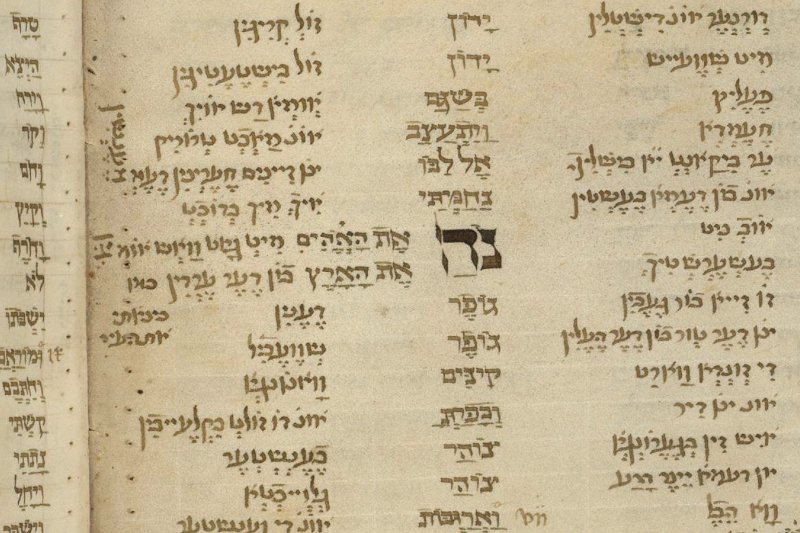
Photo: Jüdisch-deutsches Glossar zur Bibel - Cod. Reuchlin 9, Karlsruhe Badische Landesbibliothek
We use only the neccessary cookies. Please see also our data privacy statement.